12 June 2026
Artificial grass or turf: which is better for a Kent garden?
The local difference: Folkestone's soil and weather
Gardens in Folkestone, Hythe, and Sandgate sit on a mix of chalk and clay. That matters for drainage. Real turf will struggle on chalky soil unless you add organic matter and water deeply during dry spells. Artificial grass, laid on a compacted aggregate base, handles chalk well and drains quickly. Folkestone gets around 700mm of rain a year, less than the UK average. But sudden downpours can saturate natural grass in low spots. Artificial turf with proper permeable backing avoids puddling.
Cost: up front and over time
For a typical 50 square metre garden in Folkestone, good quality artificial grass costs a day's fitting and around £2,000 to £3,500 all in. Real turf costs £300 to £500 for the same area, but that is just the grass. You still need soil preparation, watering, and weeks of careful mowing. Real turf is cheaper to start but costs more over five years. You will spend about £150 a year on water, fertiliser, and reseeding. Artificial grass costs almost nothing to maintain. On price alone, if you plan to stay put for five years or more, artificial grass works out cheaper.
Maintenance: what you actually do each week
Real turf in Kent needs mowing once a week from April to October. That is about 30 minutes a time, plus edging and weeding. In autumn, leaves from Folkestone's many sycamores and limes need raking. Artificial grass just needs a brush and an occasional rinse. Families with dogs will find artificial turf easy to hose down. But it can get hot in direct sun and may need infill to keep fibres standing. Real grass stays cool and smells fresh after rain.
Look and feel: which one suits your garden style?
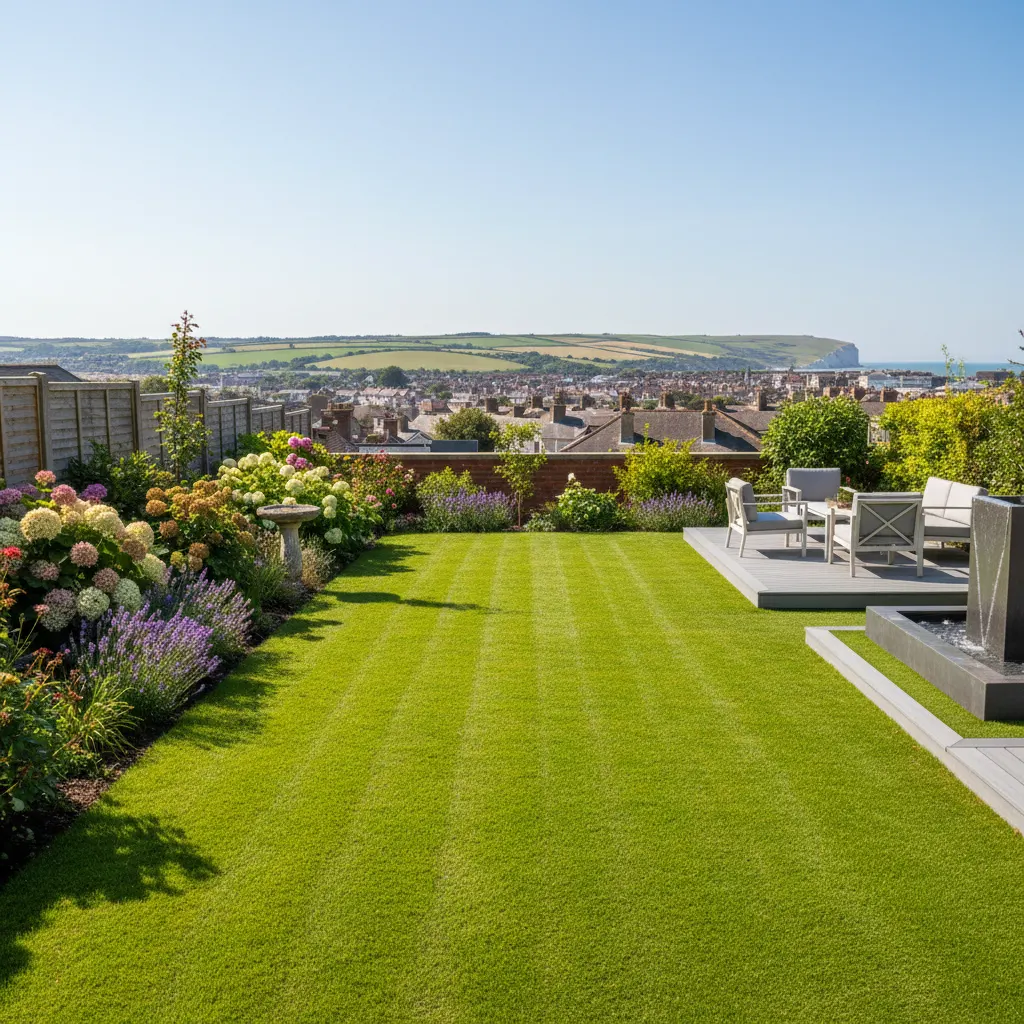
Real turf has variation. In March it is patchy; in July it is lush but may brown in a dry spell. Many Folkestone homes with south facing gardens struggle to keep real grass green without watering. Artificial grass stays green all year. Modern types look realistic from a few feet away. But up close the fibres are uniform. If you want a natural English country garden feel, real turf is better. For a modern patio or low maintenance corner, artificial grass works well.
Drainage on chalk: practical advice for local gardens
Chalky soil drains fast but can be poor at holding nutrients. Real turf needs extra fertiliser and regular watering to stop it yellowing. Some Folkestone gardens have a shallow topsoil over chalk, which means turf roots cannot go deep. Artificial grass avoids that problem entirely. The base is typically 75mm of crushed hardcore topped with sharp sand. Water runs through it into the subsoil. On heavy clay the installer may need a soak away. Our vetted landscape partners in Folkestone check your drainage before quoting.
Which one lasts longer in Kent's climate?
Real turf that is well cared for lives indefinitely but if it gets mossy or worn it needs reseeding or returfing. The typical lifespan of a garden lawn in the UK is about 15 years before major repair. Artificial grass from a good supplier lasts 10 to 15 years in direct sun. In Folkestone's temperate climate it fades slowly. The biggest risk is poor installation leading to weed growth or pooling. That is why you need a local installer who knows the soil and drainage here.
The verdict and what to do next
Artificial grass wins on low maintenance and consistent look. Real turf wins on natural feel and lower upfront cost. For a small, shady garden in Cheriton or a play area for children, artificial grass is a practical choice. For a large lawn where you want to sit and walk barefoot, real turf is better. The best way to decide is to get a local landscaper to see your garden in person. They can test the drainage, measure the light, and give a fixed price. If you live in Folkestone, Hythe, Sandgate, or Shorncliffe, fill in the form for a free, no obligation quote from our trusted local partners. They will explain exactly what works on your soil.